Walter Hayes · First edition · 54 pages
The Unfinished Record
Six investigations into what survives, how we know, and what remains uncertain.
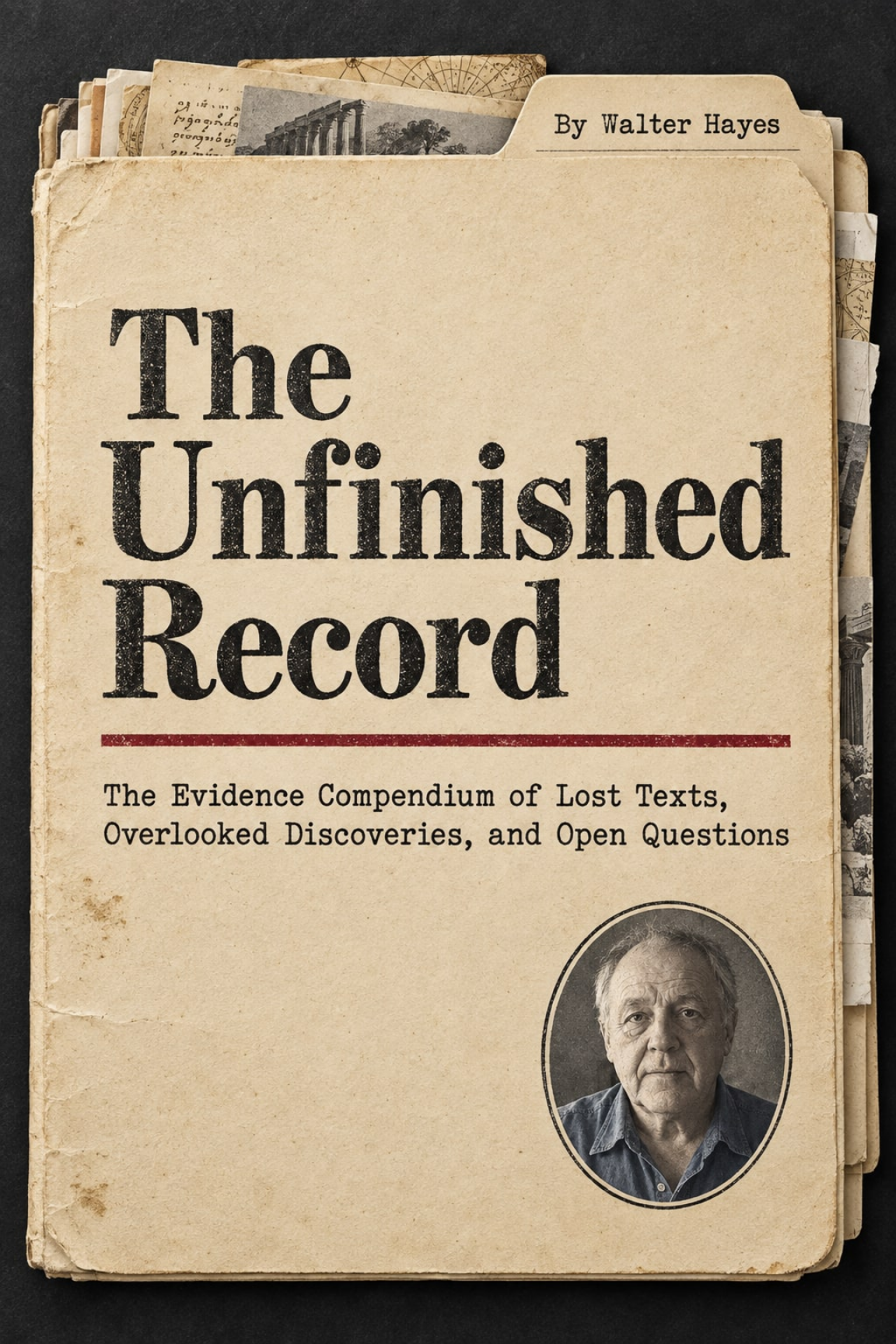
A practical way to read evidence that arrives incomplete
The book gives you methods and distinctions you can carry from one historical claim to the next—not a collection of conclusions you are expected to accept on trust.
- Separate four kinds of statement: documented, interpreted, disputed, and unknown.
- Recognize why provenance matters and what is lost when an object appears without a secure excavation history.
- Understand dating claims without treating every date as equally direct or equally precise.
- See what multispectral imaging measures and why a recovered letter can be clearer than a recovered sentence.
- Follow virtual unwrapping step by step, from scanning and segmentation to surface mapping and ink detection.
- Read the Archimedes Palimpsest as a documented process, not as a miraculous reveal.
- Distinguish demonstrated recovery from anticipated results in work on the Herculaneum papyri.
- Judge the Codex of Mexico on more than one line of evidence, including materials, imagery, calendrical content, and provenance.
- Use quarry traces at Baalbek to infer selection, shaping, extraction, and abandoned work without invoking unsupported technology.
- See how findspots and object associations change meaning through the excavation history of Girsu.
- Understand what tablet joins and archive groups reveal that an isolated cuneiform tablet cannot.
- Build a claim-and-evidence ledger recording observations, methods, interpretations, counterevidence, confidence, and remaining questions.
- Trace the principal sources through chapter references and institutional project resources.
Incomplete objects invite complete stories
A page has been scraped and written over. A scroll has been carbonized so completely that opening it may destroy it. A manuscript appears without a secure archaeological findspot. A stone remains attached to the bedrock from which workers meant to remove it.
These are not marginal complications. They determine what can responsibly be claimed.
Across the six case files in this book, the surviving evidence takes very different forms: faint ink separated by wavelength, internal scroll surfaces inferred from scans, pigments and fibres tested for age, tool marks preserved in a quarry, excavation records that reconnect objects to buildings, and clay tablets whose meaning changes when joins or archive groups are recognized.
The consequence of ignoring those differences is predictable. A direct observation becomes an interpretation. An interpretation is repeated as fact. A missing piece is treated as proof that the expected explanation must be wrong. Before long, uncertainty is doing work that evidence never did.
The Unfinished Record slows that process down. It asks three plain questions in each investigation: What survives? How was it examined? How far does the resulting claim actually reach?
One observation can support several very different statements
The distinction is easier to see when the reasoning is placed side by side.
| Level | Example | What it means |
|---|---|---|
| Documented | A scan records a contrast associated with ink on a mapped internal surface. | The measurement and recovery process can be described and checked. |
| Interpreted | The recovered marks are read as particular letters or words. | Specialist judgment connects the observation to a reading. |
| Disputed | Different readers propose incompatible transcriptions or implications. | The evidence exists, but its meaning is not settled. |
| Unknown | Unread regions may contain further writing. | The possibility remains open, but its contents cannot yet be claimed. |
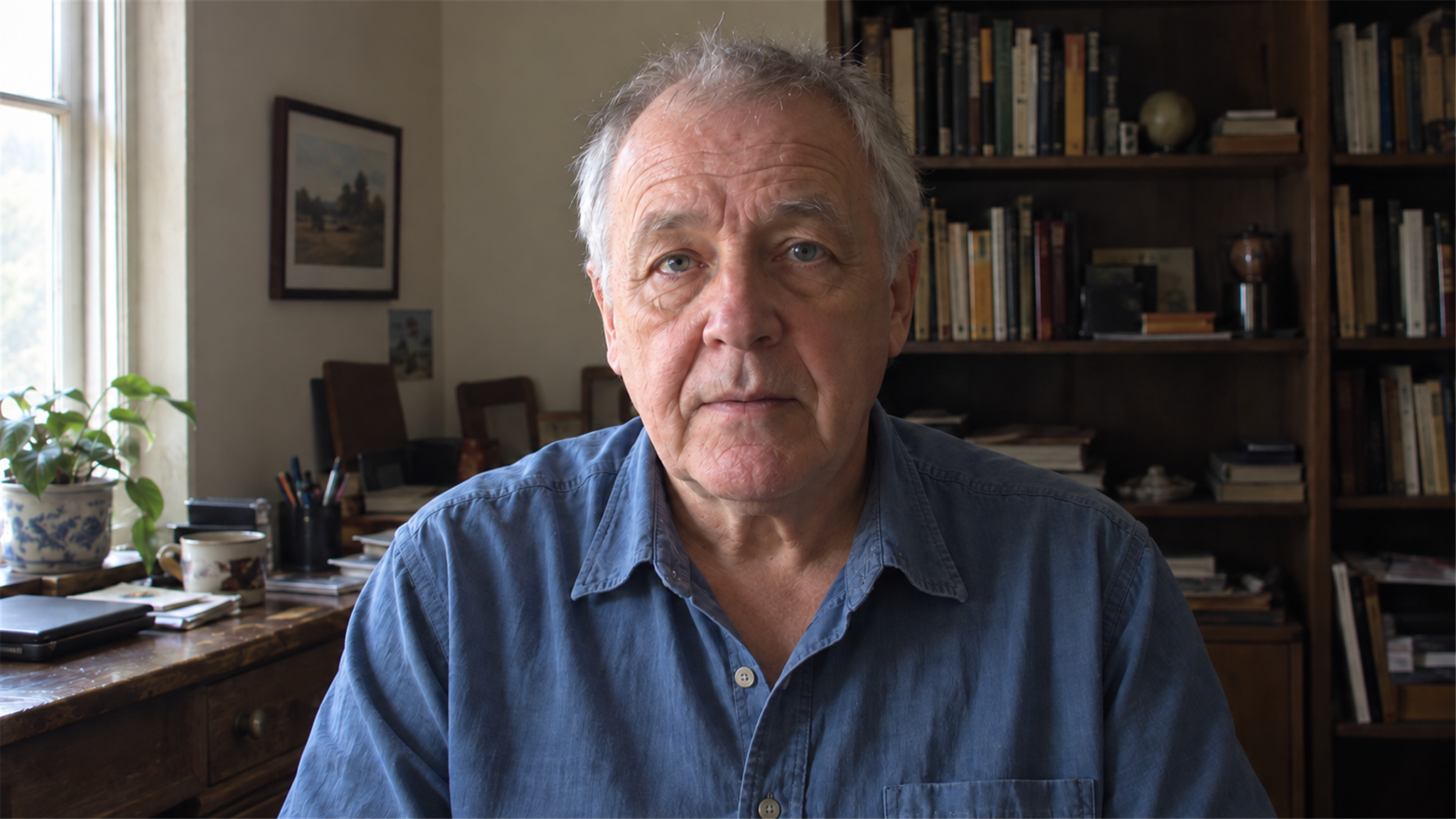
A curious reader, asking ordinary questions carefully
I am Walter Hayes. I am not presenting myself as an archaeologist, conservator, papyrologist, or epigrapher. I am an older, curious man who likes to understand how a remarkable claim was built.
In my Discovery narrations, I explore ancient discoveries, lost texts, and historical mysteries through concrete evidence and conversational explanation. My purpose is not to remove wonder from the past. It is to make the grounds for wonder easier to see.
That means distinguishing what a project has directly found from what specialists infer, what remains disputed, and what nobody yet knows. It also means following the published trail rather than inventing credentials, fieldwork, hidden authorities, or suppressed evidence.
I wrote this book because short accounts often reach the exciting result before explaining the method. Here, the method has room to breathe. You can see how an image becomes a reading, how context changes an artifact, and why restraint is sometimes the most informative conclusion.
— Walter Hayes
The pages are designed for study, not spectacle
Clear headings, structured case files, method explanations, evidence distinctions, and reference trails make the edition easy to revisit.
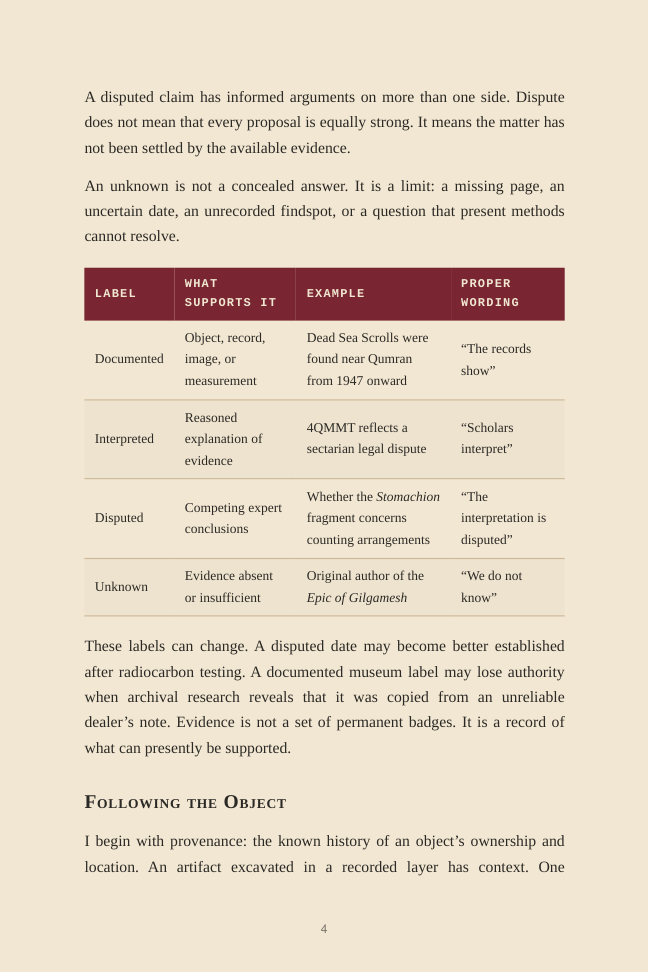
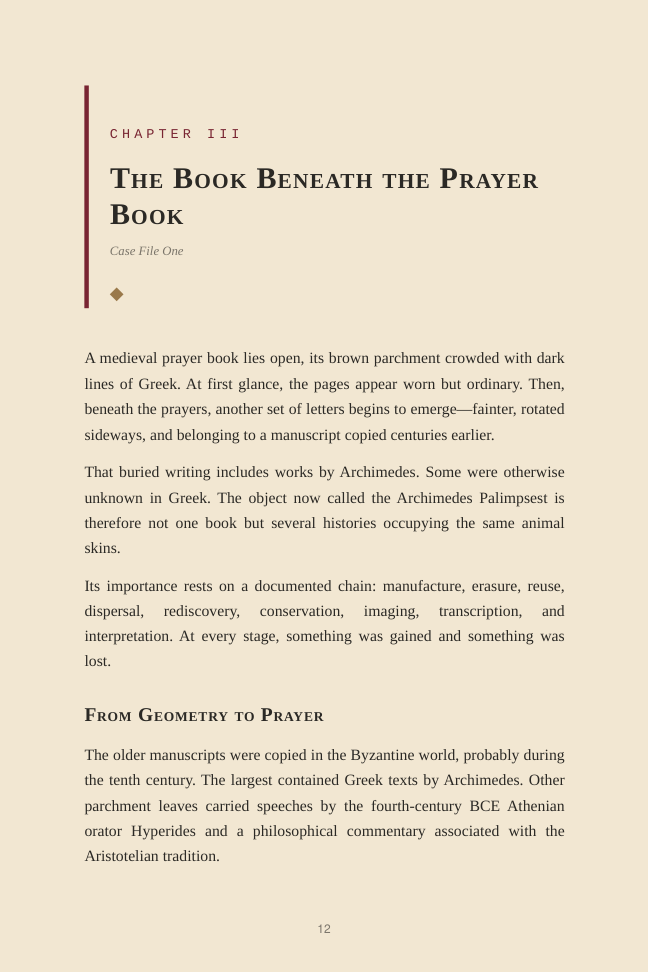
PDF edition. Read on your devices or print a copy for personal study.
Six investigations, joined by one standard of evidence
The Unfinished Record is a 54-page evidence compendium about damaged texts, unread scrolls, contested objects, monumental quarry work, lost archaeological context, and ordinary records preserved in clay.
It exists because the most interesting historical questions rarely divide neatly into “solved” and “unsolved.” The real record is layered. Some parts are measured directly. Some are reconstructed through established methods. Some support more than one interpretation. Some remain beyond present recovery.
Walter Hayes wrote the edition as a clear companion for readers who want to inspect those layers without needing specialist training. Technical processes are explained in ordinary language, while references lead outward to principal institutional and project sources for readers who want to continue.
-
How to Read an Incomplete RecordProvenance, dating, excavation context, publication history, and the four evidence labels.
-
Making the Invisible LegibleImaging, tomography, virtual unwrapping, epigraphy, stratigraphy, join analysis, and reconstruction.
-
The Book Beneath the Prayer BookThe documented recovery and study of writing in the Archimedes Palimpsest.
-
Reading a Scroll Without Opening ItThe Herculaneum papyri, scanning, segmentation, ink detection, and virtual unwrapping.
-
The Maya Manuscript That Had to Prove ItselfThe Codex of Mexico, evidence for antiquity, and uncertainty surrounding provenance.
-
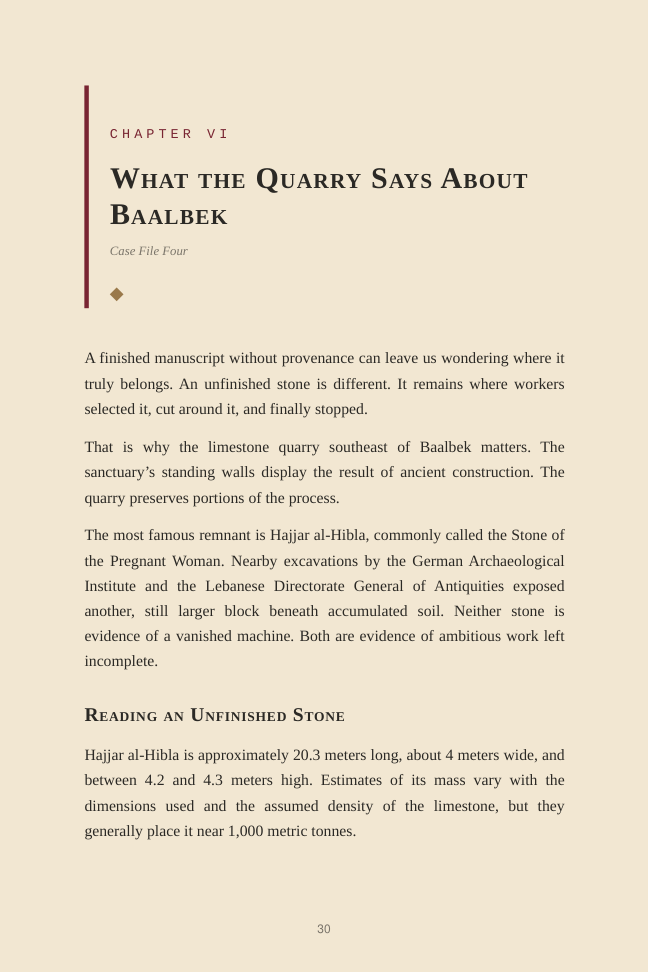
What the Quarry Says About BaalbekTool marks, bedrock attachment, measurements, extraction, and abandoned work.
-
Girsu and the Cost of Lost ContextHow excavation records, architecture, findspots, and associations restore meaning.
-
Clay Archives and Ordinary MemoryHow tablets were made, organized, joined, translated, and understood in groups.
-
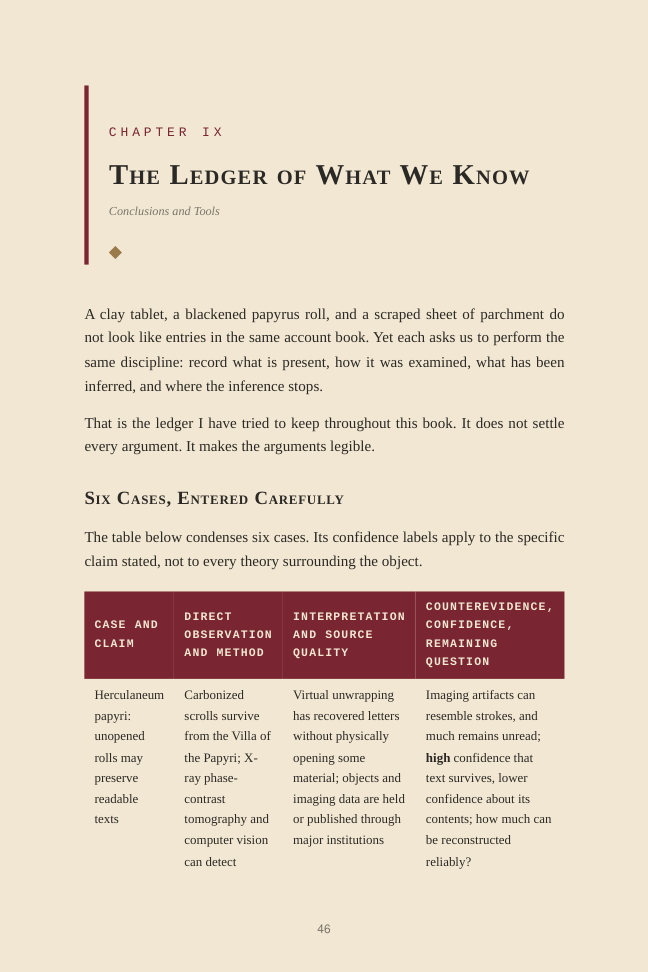
The Ledger of What We KnowA reusable framework for claims, observations, methods, confidence, and remaining questions.

What this book does not do
It does not offer a catalogue of secret histories. It does not claim proof of lost technology. It does not turn every missing fact into a mystery or treat uncertainty as evidence of concealment.
It is for readers who would rather understand why a claim is strong, limited, contested, or still open.
The complete first edition
A concise reference for reading historical evidence with curiosity and proportion.
$19
One payment. Instant digital access.
- The complete 54-page PDF with all nine chapters.
- Six structured case files covering the Archimedes Palimpsest, Herculaneum papyri, Codex of Mexico, Baalbek, Girsu, and cuneiform archives.
- A method-to-claim framework separating direct measurement from interpretation and uncertainty.
- A claim-and-evidence ledger for checking observations, source quality, counterevidence, and confidence.
- A source-quality worksheet and glossary for use beyond the six investigations.
- Chapter references and source trails to the principal institutional and project resources discussed.
Your PDF is available immediately after purchase.
Plain answers before you choose
Is this book arguing for lost technology or secret history?
No. The Baalbek chapter, for example, examines what quarry relationships, unfinished stones, measurements, bedrock attachment, and tool marks can establish. Practical engineering interpretations are kept separate from claims that require evidence not presently available.
Do I need a background in archaeology or ancient languages?
No. The methods are explained in accessible language. Terms such as multispectral imaging, tomography, virtual unwrapping, epigraphy, stratigraphy, and join analysis are introduced through the questions they can answer and the limits they retain. A glossary is included.
Does Walter Hayes claim professional credentials or personal fieldwork?
No. Walter writes as a careful general reader and conversational narrator. The edition follows published institutional and project sources. It does not invent credentials, firsthand excavation experience, private access, or suppressed evidence.
Are the Herculaneum scrolls presented as fully read?
No. The chapter distinguishes accurately dated, demonstrated recovery milestones from anticipated future results. It explains the process of scanning, segmentation, surface mapping, and ink detection while remaining clear about what has and has not yet been recovered.
How are disputed objects such as the Codex of Mexico handled?
By separating questions that are often collapsed together. Material analysis, iconography, and calendrical content can support antiquity while reported discovery circumstances leave uncertainty about provenance. The chapter asks what confidence is reasonable when those conclusions do not align perfectly.
What exactly will I receive after purchasing?
You will receive the English-language PDF. Read it on your devices or print a copy for personal study.
Keep the question open without leaving the evidence behind
The historical record can be damaged, scattered, overwritten, carbonized, displaced, or unfinished—and still tell us something precise.
The Unfinished Record shows how that precision is earned, where it ends, and why the remaining uncertainty deserves careful language rather than a convenient story.
9 chapters · Six case files · English PDF